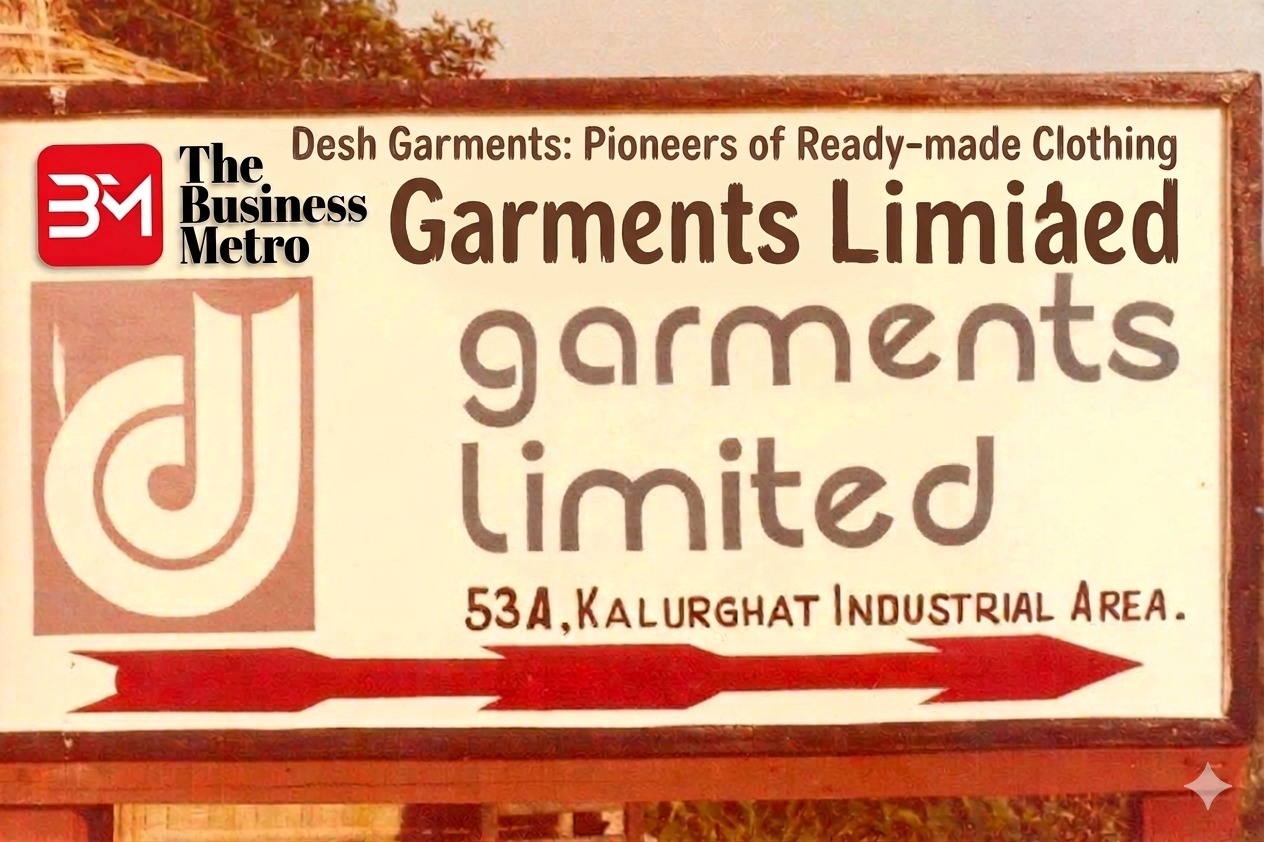
As the midday siren wailed, the sewing machines across the massive 80,000-square-foot floor came to a sudden halt. Leaving their dance with needles and threads, workers headed out for lunch. Sitting under the shade of trees, they shared meals and laughter before returning punctually to their respective tables. The floor buzzed back to life. While it looks like any ordinary factory routine today, behind it lies a glorious history. This is 'Desh Garments'—the initial spark that ignited Bangladesh’s economic powerhouse, the readymade garment (RMG) industry.
The journey began in 1977 under the visionary leadership of Nurul Quader Khan, marking the dawn of Bangladesh's 100% export-oriented modern apparel sector. At the time, the country had absolutely no prior experience in mass garment manufacturing. To bridge this gap, Nurul Quader Khan took a revolutionary step. He forged a partnership with South Korea’s renowned Daewoo Company and sent 130 Bangladeshi workers and officials to South Korea for six months of intensive technical training. These trained individuals later became the backbone of the entire industry, with many eventually stepping up to become major entrepreneurs themselves.
Beyond developing a skilled workforce, Desh Garments was a true trendsetter in business innovation. The institution pioneered the introduction of the 'Back-to-Back LC' (Letter of Credit) and 'Bonded Warehouse' facilities in Bangladesh. This revolutionary financial strategy provided the solid foundation upon which Bangladesh’s monopoly of success in the global market was built. Since its inception, Desh Garments has maintained its stellar reputation primarily in shirt manufacturing. Today, it proudly produces apparel for global giants like Kohl's and Seanjohn in the US, and Aldi and CK in Europe.
However, the path to success was far from smooth. The devastating cyclone of 1991 caused severe damage to the factory, forcing its main operations to suspend for nearly five years. That setback dealt a massive financial blow of around 130 million BDT. The crisis deepened in 1998 with the sudden demise of its dreamer, Nurul Quader Khan. Weathering all these storms, his daughter Vidiya Amrita Khan took over the reins in 2008, reviving her father’s legacy with immense dedication and care.
The greatest beauty of Desh Garments lies in its deep-rooted owner-worker relationships. Many employees have been serving here for 35 to 36 years, viewing the factory not just as a workplace, but as their own family. This dedicated family of 900 workers continues to stand proud against all odds. Today, Bangladesh stands as the world's second-largest garment exporter after China. As the cradle of this multi-billion dollar achievement, Desh Garments will forever remain an extraordinary and glorious chapter in the nation's history.