The policy shift was confirmed during a high-level virtual meeting held on 21 May between a Bangladeshi delegation led by Finance and Planning Minister Amir Khasru Mahmud Chowdhury and an IMF team headed by Deputy Managing Director Nigel Clarke.
According to a statement issued by the Ministry of Finance on 25 May, the meeting reviewed Bangladesh’s macroeconomic outlook, the progress of ongoing IMF-supported programmes, and prospects for future institutional cooperation.
During the discussion, Khasru recalled the constructive engagements held at the IMF–World Bank Spring Meetings in Washington and reaffirmed the government’s commitment to maintaining macroeconomic stability and pursuing structural reforms. However, he noted that the current IMF programme had been designed under a markedly different political and economic environment.
The minister argued that significant changes in domestic political realities, coupled with heightened global economic uncertainties, have made several reform commitments under the existing programme increasingly difficult to implement. He emphasized that the government remains committed to reforms but seeks a more pragmatic and country-specific agenda aligned with current economic conditions.
Against this backdrop, both sides discussed the possibility of launching an entirely new IMF-supported programme under the newly elected government. The proposed framework would prioritize achievable reforms and implement them in phases over a realistic three-year period.
IMF Deputy Managing Director Nigel Clarke welcomed Bangladesh’s renewed reform agenda and its proposal for a fresh lending arrangement, expressing optimism about continued close and constructive engagement between the Fund and Bangladesh.
The two sides agreed on the need for a practical and implementation-focused financing programme and decided to accelerate preparatory work for future negotiations.
Senior officials familiar with the discussions said the decision to move away from the existing arrangement was driven largely by a prolonged impasse over several IMF conditions. These included proposals for a uniform 15% value-added tax (VAT), the withdrawal of various tax exemptions, and the replacement of broad-based subsidies on electricity and fertilizer with targeted cash transfer mechanisms.
International development partners have also raised concerns over recent amendments to the Bank Resolution Act 2026, arguing that the changes could signal a step back from transparency and governance reforms.
Speaking publicly on the issue, the finance minister stated that as a government elected by popular mandate, it could not accept donor-imposed conditions that conflict with public interests or the commitments outlined in the BNP-led administration’s electoral manifesto.
Senior economic policymakers maintain that retaining an IMF programme remains crucial for Bangladesh, as it serves as a key indicator of international financial credibility. An active IMF arrangement also facilitates access to an additional $3–4 billion in annual budget support from multilateral lenders such as the World Bank and the Asian Development Bank.
Officials indicated that an IMF mission may visit Dhaka in July or August to negotiate the size, duration, and policy conditions of the proposed alternative financing framework.
BUSINESS
Bangladesh Seeks New $5 Billion IMF Programme, Moves Away from Existing Loan Arrangement
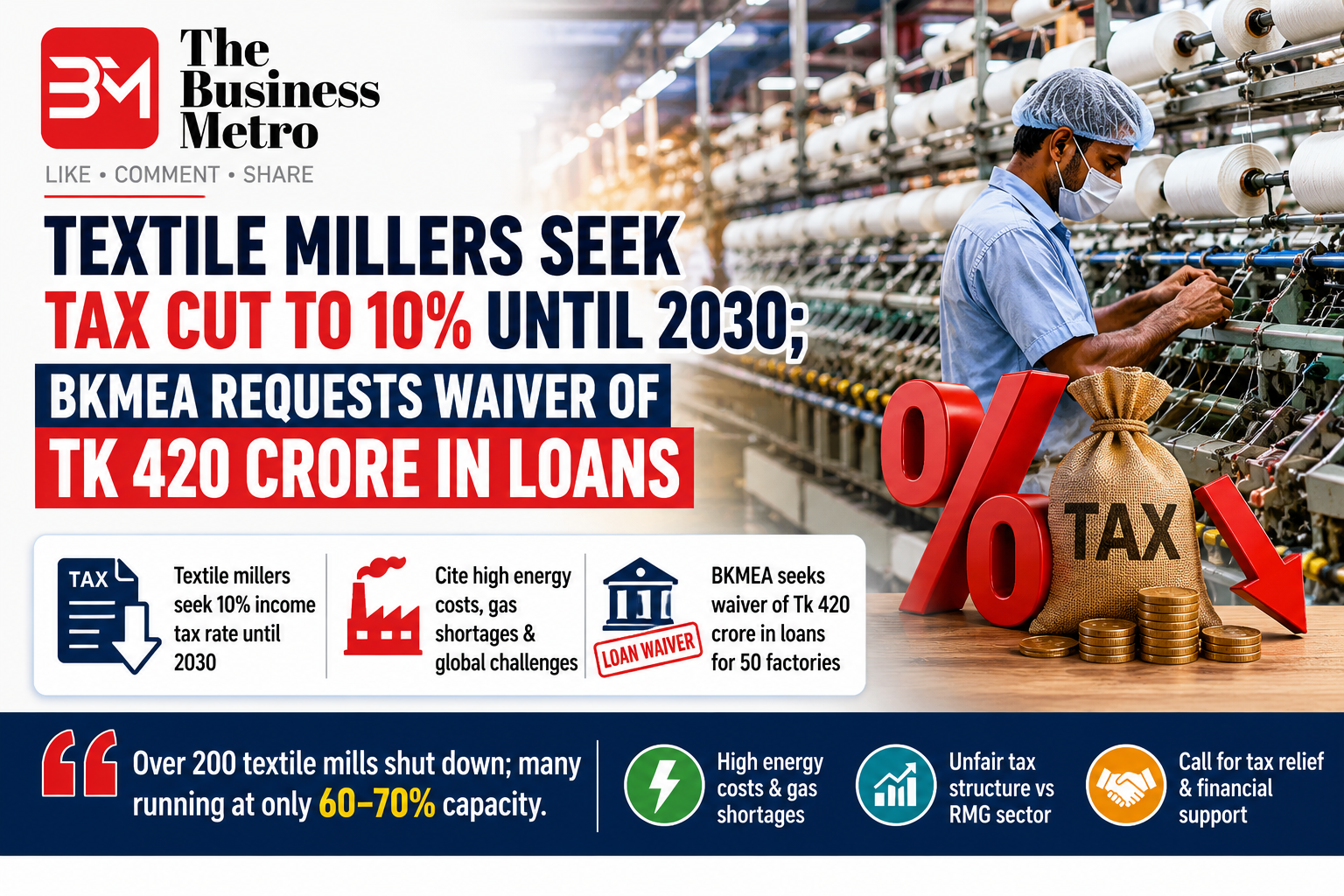
Bangladesh Seeks New $5 Billion IMF Programme, Moves Away from Existing Loan Arrangement | Photo: BusinessMetro

The Shrinking Potential of Bangladesh’s Leather Industry: Why Every E…
4 months, 3 weeks ago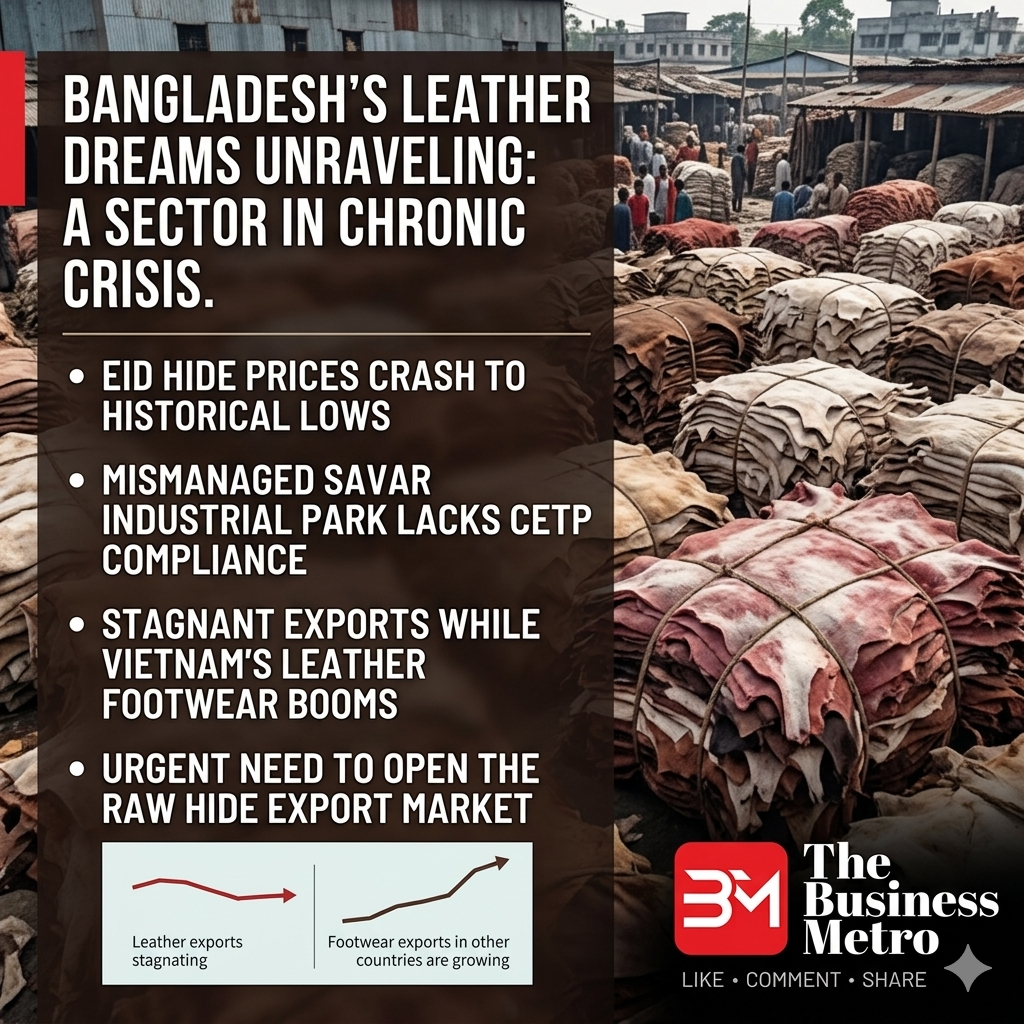
Textile Millers Seek Tax Cut to 10% Until 2030; BKMEA Requests Waiver…
4 months, 3 weeks ago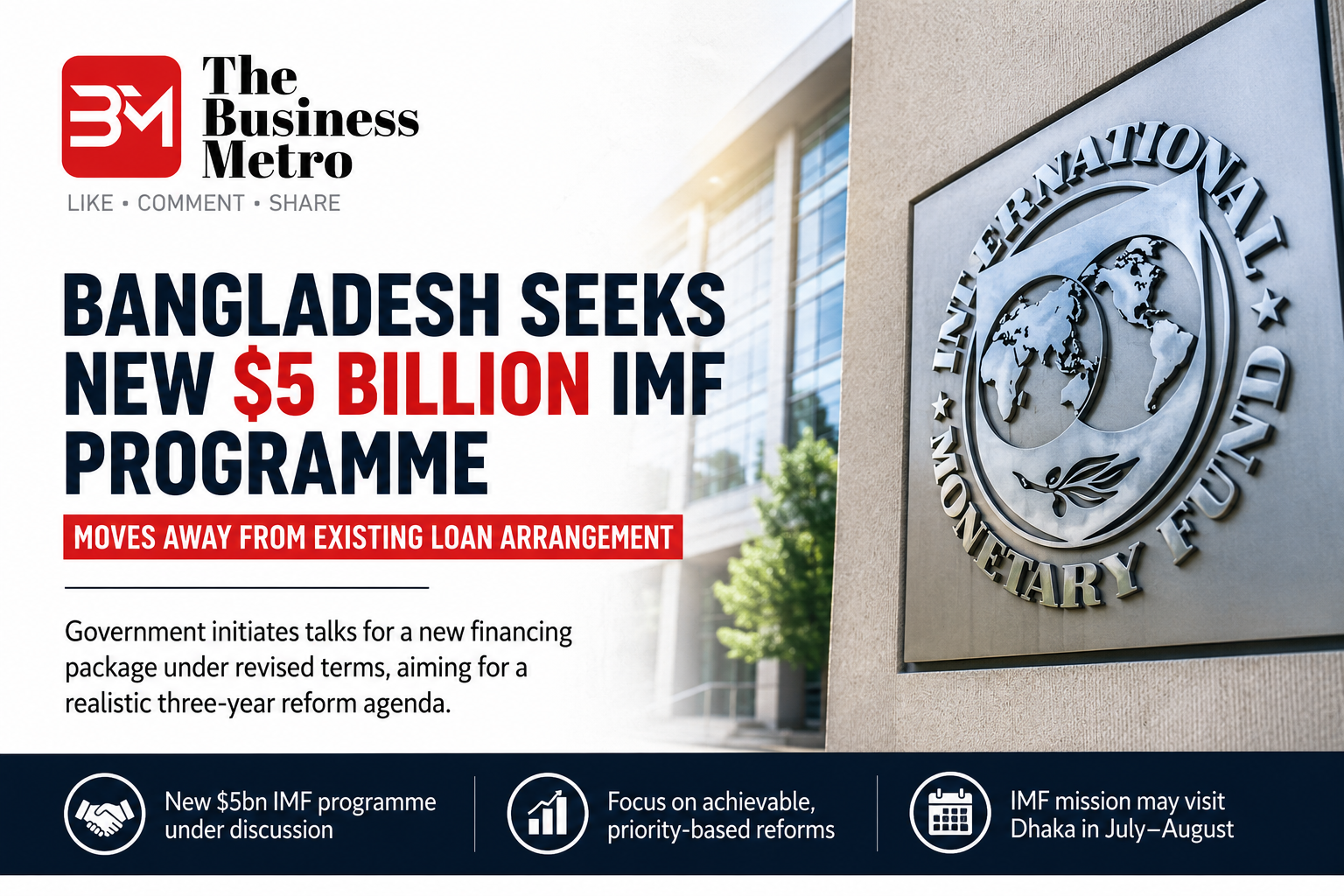
Six Months of Over $3 Billion in Remittance: A New Milestone
4 months, 3 weeks ago