
The process of leasing the New mooring Container Terminal (NCT) of Chittagong Port the prime economic lifeline of Bangladesh to Dubai-based global port operator DP World has reached its final stages. While this deal has triggered intense domestic labor protests and legal battles, it also opens the door to far-reaching positive and negative impacts on the national economy.
An analytical breakdown of the pros, cons, and economic risks associated with the arrival of this multinational giant is detailed below:
Economic Potential and Advantages (The Gains)
Integration of Modern Technology and Efficiency: As one of the world's leading port management operators, DP World will bring advanced software, automated tracking systems, and cutting-edge logistics management. This will exponentially accelerate container handling speeds at Chittagong Port, drastically reducing vessel turnaround times and saving both time and money for businesses.
Direct Connectivity with Global Shipping Lines: DP World commands a massive global network. Their integration will incentivize major international shipping lines to route directly to Chittagong Port, significantly strengthening Bangladesh's position in global import-export trade routes.
Gateways to Massive Foreign Direct Investment (FDI): This agreement will instill confidence in major Middle Eastern corporate conglomerates to invest in Bangladesh. It will pave the way for substantial FDI in infrastructure projects centered around the port.
Negative Impacts and Disadvantages (The Losses)
Outflow of Revenue and Foreign Currency: The NCT is a fully functional, highly profitable terminal whose earnings currently remain within the country. Once DP World takes charge, a major share of these profits will be repatriated to Dubai in US dollars. Consequently, Bangladesh will lose out on a guaranteed stream of domestic revenue and vital foreign exchange reserves.
Marginalization of Local Operators and Capacity: Local operators, such as Saif Powertech, have been managing this terminal with high efficiency for years. Giving monopoly preference to foreign entities risks stifling the growth of domestic institutional capacity.
Labor Layoffs and Employment Crisis: Multinational corporations lean heavily on automation and digitized tech. This transitions poses a severe threat of job displacement for thousands of general port laborers, potentially fueling widespread local socio-economic unrest.
National Security and Geopolitical Risks
The most intense debate surrounding this deal hinges on national sovereignty and security vulnerabilities. Chittagong Port is the beating heart of the Bangladeshi economy; relinquishing control of this vital organ to a foreign entity carries inherent risks.
Crucial Warning Sign: If DP World faces international sanctions or gets entangled in diplomatic standoffs, Bangladesh’s entire import-export machinery could grind to a halt. Furthermore, DP World’s history of contract violations in countries like Djibouti and Somaliland serves as a stark warning for Bangladeshi policymakers.
Final Economic Outlook
In summary, the arrival of DP World is poised to instantly elevate Chittagong Port's operational capacity to international standards, providing a substantial boost to the national GDP. However, these benefits come at the cost of guaranteed revenue loss and significant national security risks.
Ultimately, this gamble will only pay off for Bangladesh if the government can finalize the contract under stringent conditions that retain strategic control in domestic hands. Otherwise, this highly anticipated venture risks becoming a permanent geopolitical and economic liability.
NEWS
DP World in Chittagong: Gains vs Risks
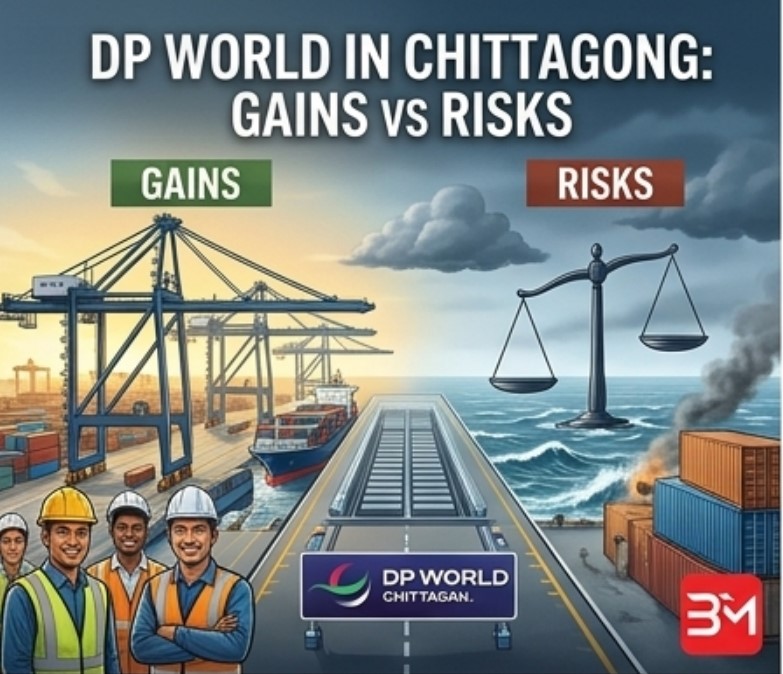
DP World in Chittagong: Gains vs Risks | Photo: BusinessMetro