Memories of the Beirut port blast and the local BM Depot tragedy loom large as Chittagong Port sits on a ticking time bomb. Hundreds of hazardous chemical containers are left abandoned under unsafe conditions. A severe staff shortage at the customs laboratory combined with years of bureaucratic delay has turned the nation’s primary economic gateway into a massive safety hazard.
Unsafe Chemical Storage Ignites Catastrophic Fears
International rules dictate that flammable chemicals must be cleared immediately upon offloading. In reality, hundreds of containers holding sulphuric, nitric, and hydrogen peroxide acids have been rotting under the open sun for over a decade. Intense summer heat has already caused some containers to corrode and leak, threatening a major industrial disaster.
Undermanned Customs Laboratory Stalls Critical Testing
The crisis is worsened by the severe operational failure of the Chittagong Custom House chemical laboratory. Handling over a hundred samples daily, the facility is paralyzed by a manpower shortage, lacking even a chief chemical examiner. Consequently, standard 48-hour testing reports now take over two weeks, forcing importers to leave hazardous cargo stranded at the port.
Urgent Actions Required to Avoid Disaster
To avert a catastrophe, bureaucratic inertia must end immediately through three decisive steps:
Upgrade Laboratories: Modernize testing facilities, hire chemical experts, and guarantee reports within 48 hours.
Fast-track Disposal: Auction or safely destroy unclaimed hazardous cargo strictly after 30 days.
Build Specialized Off-docks: Mandate automated, fire-resistant chemical storage facilities well outside the main port area.
NEWS
Counting Down: Chittagong Port's Chemical Risk
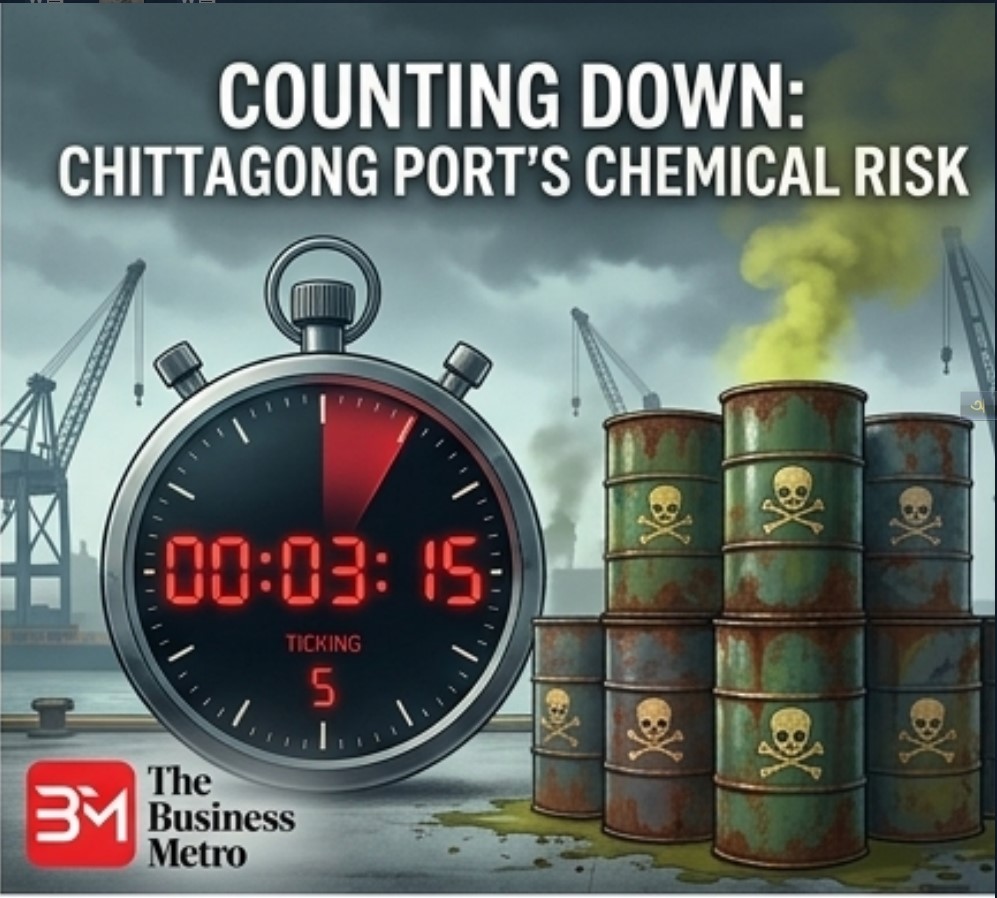
Counting Down: Chittagong Port's Chemical Risk | Photo: BusinessMetro